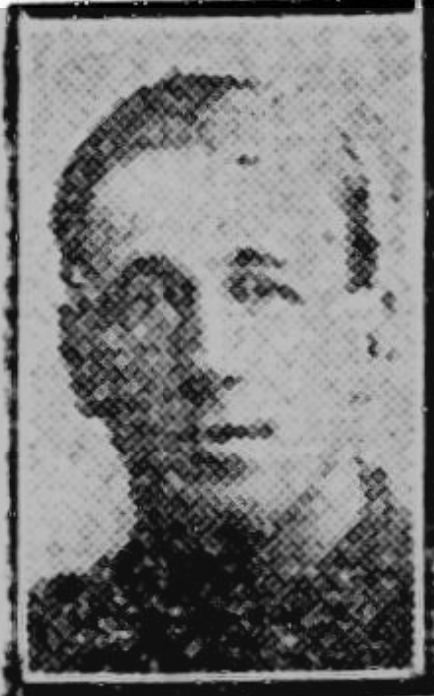
“he died gloriously in the Field of Battle” and “giving his life for his Country as truly as any soldier who fell on the Field of Battle.”
William was son of Tom and Eva. Tom was an engineering labourer, originally from Slingsby, Yorkshire. Tom married Eva Jordan, who was from Weatherthorpe, Yorkshire and the couple had several children, including Mabel, William and Herbert.
In 1916, a 22 year old William lived with his parents at 13 Westwood View, Ladypit Lane, Hunslet. Young William worked as a butcher at Messrs Senior, Dewsbury Road and was engaged to Gladys Nichols. Sadly, it was an engagement that never led to marriage, as it was cut short by the brutality and futility of war.
In June, 1916, William was conscripted to the 9th Battalion, West Yorkshire Regiment, a Kitchener battalion raised at the onset of war. Initially serving in Galliopoli, this battalion was sent to France on 1 June, 1916. After arriving in Marseille, the men took a train north to the Somme to assist there. After a short period of training, Private William Suggitt met his fellow comrades at the Somme in September, 1916 and took part in heavy fighting in this area. As fighting at the Somme was paused on 18th November, 1916 due to extreme cold weather, Private William Suggitt initially survived the horrors of the Somme, but unfortunately he “died gloriously in the Field of Battle” (National Roll of Honour) at Beaumont-Hamil on 1st December, 1916. Private William Suggitt is remembered at Thiepval.
Tom Suggitt had lost his son, but at the time of William’s death, another tragedy had already struck the family and just weeks later, a tragedy that would take the life of Tom’s dear brother (William’s Uncle), Rifleman James Arthur Suggitt. Tom and James must have been close because James lived with his brother Tom and Tom’s family. I can not find any evidence of James having a wife or children. Uncle James ever even saw a trench, yet his death was described on the National Roll of Honour “giving his life for his Country as truly as any soldier who fell on the Field of Battle.”
James Arthur Suggitt worked as a dispatch clerk for a clothing wholesalers, without a protected occupation, he was most likely conscripted as he joined the 2nd battalion of the 8th West Yorkshires in March 1916, he was given the service no 5060. Rifleman J. A Suggitt served with his unit in various locations in the UK. Unfortunately, on Monday 20th November, 1916, just 11 days before his nephew William was killed, James was in a lecture at Bulford Barracks learning about grenades and bombs in preparation to go out to France in January 1917, when a tragedy happened that meant James never made it to France.
Rifleman G. W. Harrison and Rifleman W.A. Goode were giving an instruction lesson on how to use a grenade to 13 or 14 men. First, they learnt about Mells bombs, 5 or 6 of these were in the classroom, alongside two rifle grenades and a hand grenade on a table. Harrison taught the group about Mells bombs first, then questioned them to check for understanding. After all was understood, Harrison proceeded to pick up the rifle grenade, which he took apart like he had done on many occasions. The different parts of the grenade were explained before Harrison put it all back together and finally gave a demonstration on how to work it when it exploded. As the battalion bomber, Harrison didn’t think the bombs were charged, but unfortunately they were and they were full of high explosives.
Immediately after the explosion, Dr Ellison, the barracks doctor arrived and the uninjured also helped. Rifleman Goode was already dead and Harrison died 10 minutes later. Five other men were also injured, some severely and it was assumed they would not survive, one of these men was James Arthur Suggitt.
All the survivors had been stood nearer the back, so they didn’t have a clear view of what happened, whereas the victims were the ones who had their clearest view, but they had died or were severely injured and unable to give testimonies. The story made headlines in local newspapers all over the UK, each one reports slightly different testimonies, but the key theme was that as Harrison put the grenade back together, it came into contact with the table and this simple knock caused the detonator to explode. Although an accidental drop was noted as the cause of the explosion that caused the deaths, there were other explanations.
Rifleman Arthur Mills told the inquest how Harrison was explaining about the direction of the grenade would take when fired and that he was simply holding it when it exploded. Mills said that Harrison did not drop it although did admit he was stood furthest back so might have had his line of sight interrupted.
Sgt Jackson explained to the inquest how bombs and grenades used in training came from stores and had been used for this purpose on many occasions. Jackson said the grenade was loaded and Harrison would know this as a “first class man” with experience, he would know that for the grenade to be loaded, it would have markings indicating so. Jackson believed that Harrison must have made a mistake or that the grenade was accidently dropped.
The inquest decided the explosion was accidental and that the grenade was dropped, but the court recommended that only dummy grenades should be used for training purposes in future.
James Suggitt died from his injuries in Bedford County Hospital six and a half weeks after the explosion, on 5th January, 1917, aged 37. This was a month after his nephew William died at Beaumont-Hamil.
Rifleman James Suggitt is laid to rest at Hunslet Cemetery in Leeds, his nephew Private William Suggitt is remembered on the memorial to the missing at Thiepval.

 The Stories Behind the Stones
Leave a comment