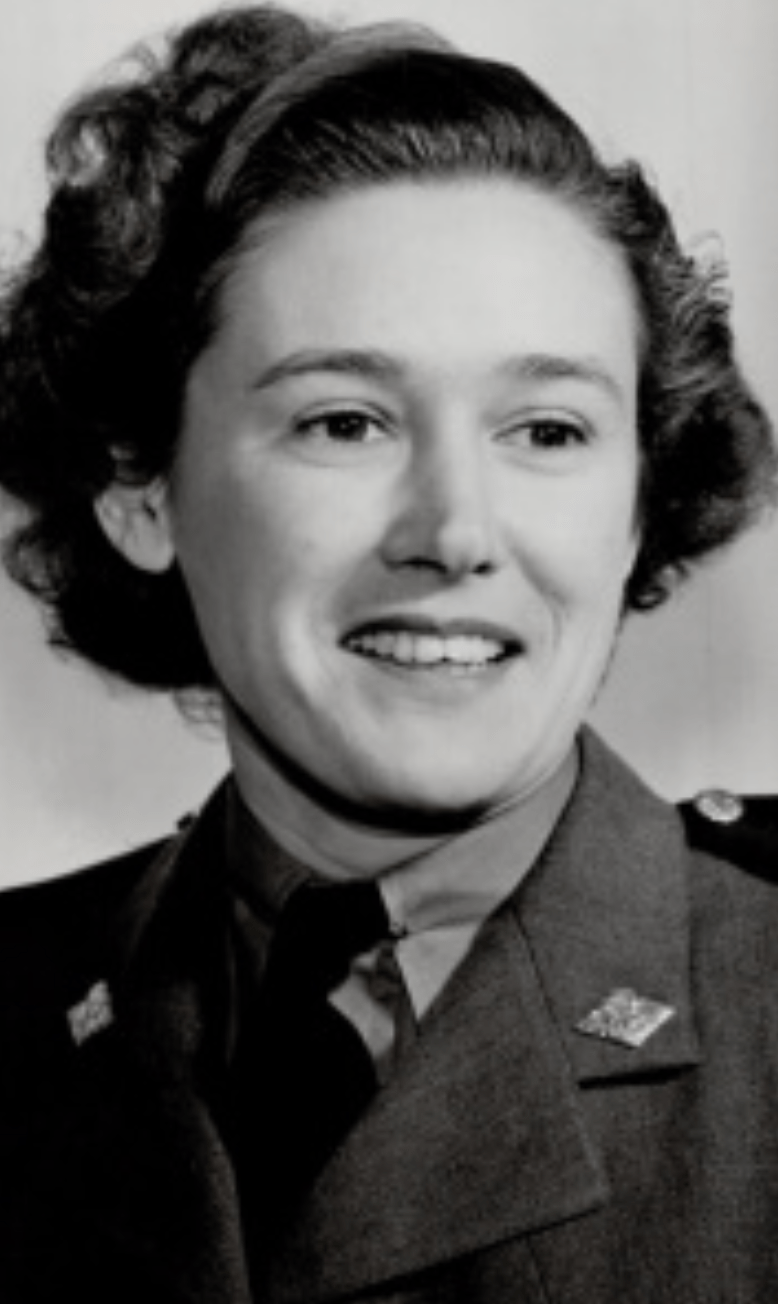
Lady Banting
To mark International Womens Day, we have the story of an incredible women who has (and still is) saving many lives, but never gained the recognition because of her much more famous husband, whose work overshadowed the couple.
Henrietta Elizabeth Ball was born on 4 March, 1912 in Stanstead, Quebec, the eldest of three sisters. After their father died whilst the girls were very young, they moved to Newcastle, New Brunswick with their mother.
Inspired by Marie Curie, who had recently become the first woman to win a Nobel prize, which was for her discovery of radioactive elements to treat cancer, Henrietta was motivated to study biology and medicine. After an initial year at McGill University in Montreal, Henrietta transferred to Mount Allison University, New Brunswick. Graduating with a Bachelor of Arts in Biology in 1932, she would soon after gain paid work as a lab assistant at St John’s Hospital, where she worked for three years.
In 1930’s Canada, the societal norm expected women to be housewives and not to study at University, if they did it was Nursing or Teaching. Women studying STEM subjects in the 1930’s, was virtually unheard of, this means Henrietta’s next step was huge and a key indicator of her passion and drive to follow in the footsteps of Marie Curie. Henrietta enrolled onto a Medical Research Masters of Arts programme at the University of Toronto. Simultaneously, she gained employment at the University of Toronto’s Banting Institute, where she worked alongside the famous Sir Fred Banting, who had discovered insulin the decade before, thus making Type 1 a condition people can live alongside, rather than the death sentence it was prior to this.
Henrietta was working directly under Fred Banting as she was his research assistant. Not much is known about their courtship, she later advised their executors to destroy all love letters between them. It is known that Henrietta graduated from her Masters in 1938 and moved to London, Ontario. Banting was also living in London and he soon tracked her down.
The couple were married in Toronto in 1939, with Sir Banting 21 years her senior. Banting had already received his Knighthood, meaning Henrietta gained the title of Lady Banting. Not only did she now have a new title, she inherited a 10 year old stepson (from Sir Banting’s first marriage) and as she was married to a Canadian national treasure, she was expected to attend high profile events bringing their relationship into the public eye. This was a whole new world Henrietta, who had to take time out of her own career. For the record, Sir Banting also did welcome his newfound fame and Canada’s “group of seven” (famous painters) adopted him as their eighth member, taking him into the wilderness to paint, a welcome change from the pressure he was under as Canada’s first Nobel laureate.
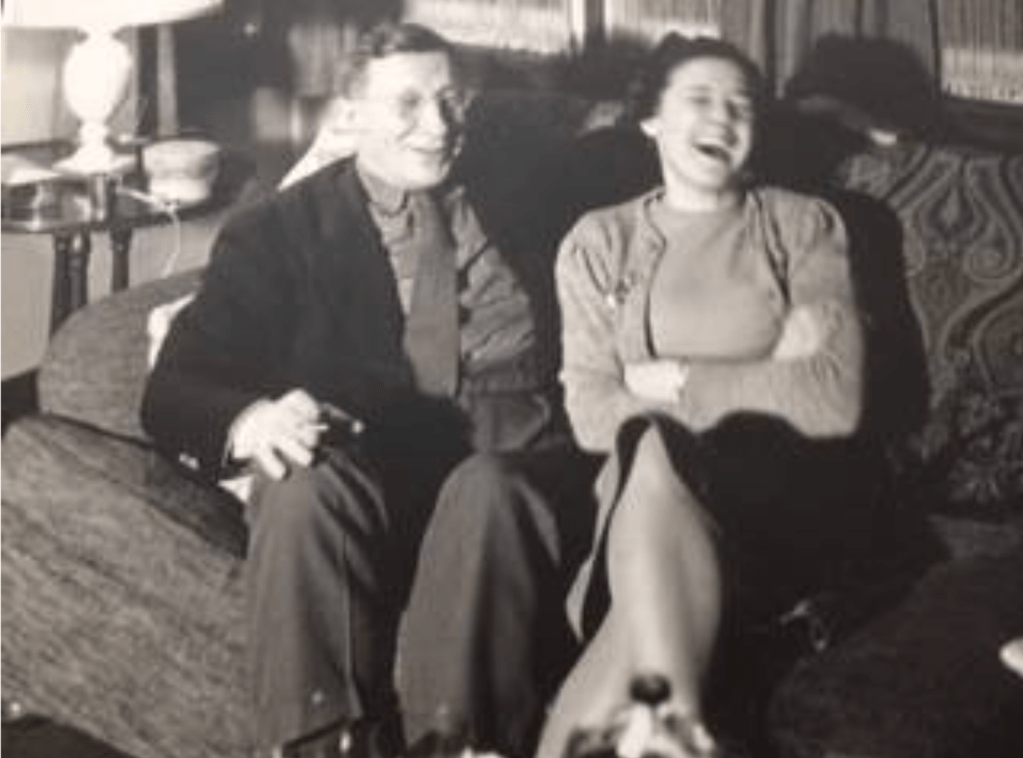
Sadly, Sir Banting met an untimely death at age 49 in February 1941. With World War Two raging, he was on his way to England to advise the government on biological warfare, when the twin engine plane he was in failed over Newfoundland. After a short marriage of two and half years, Lady Banting was now the widow of a national hero. This brought new challenges, she was expected and attend events in her husbands absence whilst she and the nation grieved Sir Bantings death. Lady Banting however, had her own ideas, she would now continue with her own career . Just 10 months a widow, she proceeded to enrol into the University of Toronto’s Medical School to complete her Medical degree. Many thought Henrietta was copying her husband, continuing his work as a way of dealing with her grief, but she was now focusing on persuing her own passion for Science and Medicine and was to later to make an amazing discovery that rivalled her husbands.
Medical School was not easy for Henrietta, as Sir Bantings widow, the University waived their tuition fee, but she insisted on being treated the same as everyone else and asked them to remove the waiver. Lady Banting was very well known and a high profile student, professors would seek her out as they simply wanted to meet her and talk to her about her late husband. The nation was still mourning this great mans death whilst Lady Banting was a medical student. Furthermore, Henrietta was now in her early 30’s, ten years older than her coursemates, she was funding her (now orphaned) step-son through boarding school and felt she did not fit in. In addition to the pressures of med school, she was still expected to carry out high profile ceremonial work which contributed to her husbands legacy. The Banting surname and title of Lady carried great responsibilities, but also brought privileges and attention she did not welcome.
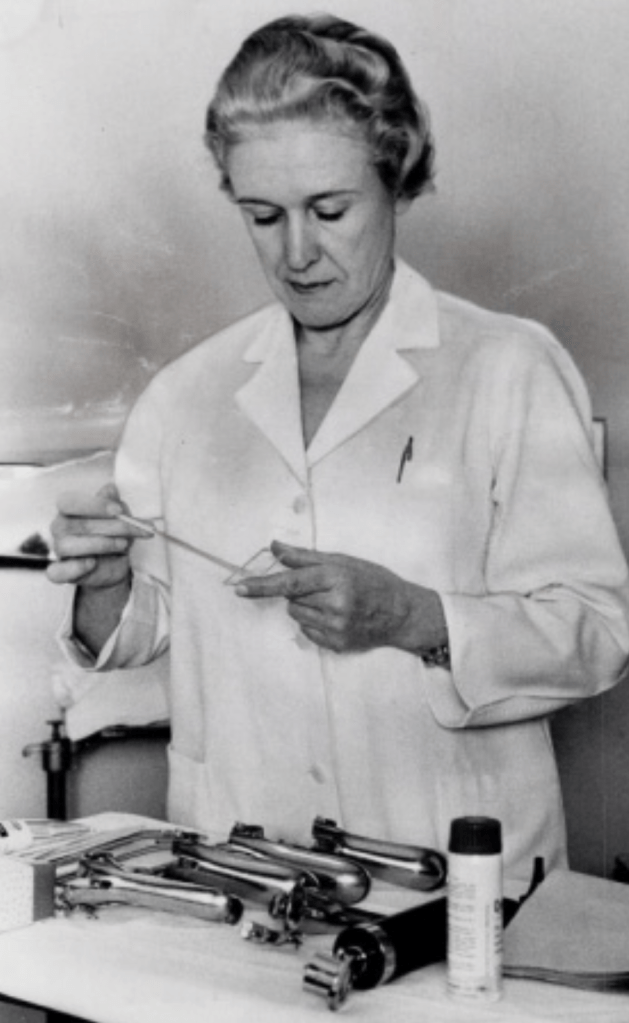
Just like her husband had done in the Great War, Lady Banting joined the Royal Canadian Medical Corps in the Second World War. Again, people said she was just copying her husband in her grief, but the truth was that by the time the war ended in 1945, most of her cohort at medical school had enrolled into the medical corps.
After her graduation, and the end of the war, Lady Banting spent some time in London, UK, where she gained a Post Graduate degree in Obstetrics and Gynaecology, making her the first Canadian woman to be awarded membership to Britian’s Royal College of Obstetrics and Gynaecology in 1928 . She was then offered a role in Hong Kong (which was still under British rule) lecturing at the university.
Upon returning to Canada in 1951, Lady Banting established her own clinic at Women’s College Hospital in Toronto, and in 1958 she was appointed Director of the Cancer Detection Clinic. Under her leadership, in just two years, the clinic advanced from screening 24 women a month for breast cancer to screening over 500. It was during Lady Banting’s time at this clinic that she followed in the steps of her hero, Marie Curie and carried out research into women’s health issues, specifically breast cancer.
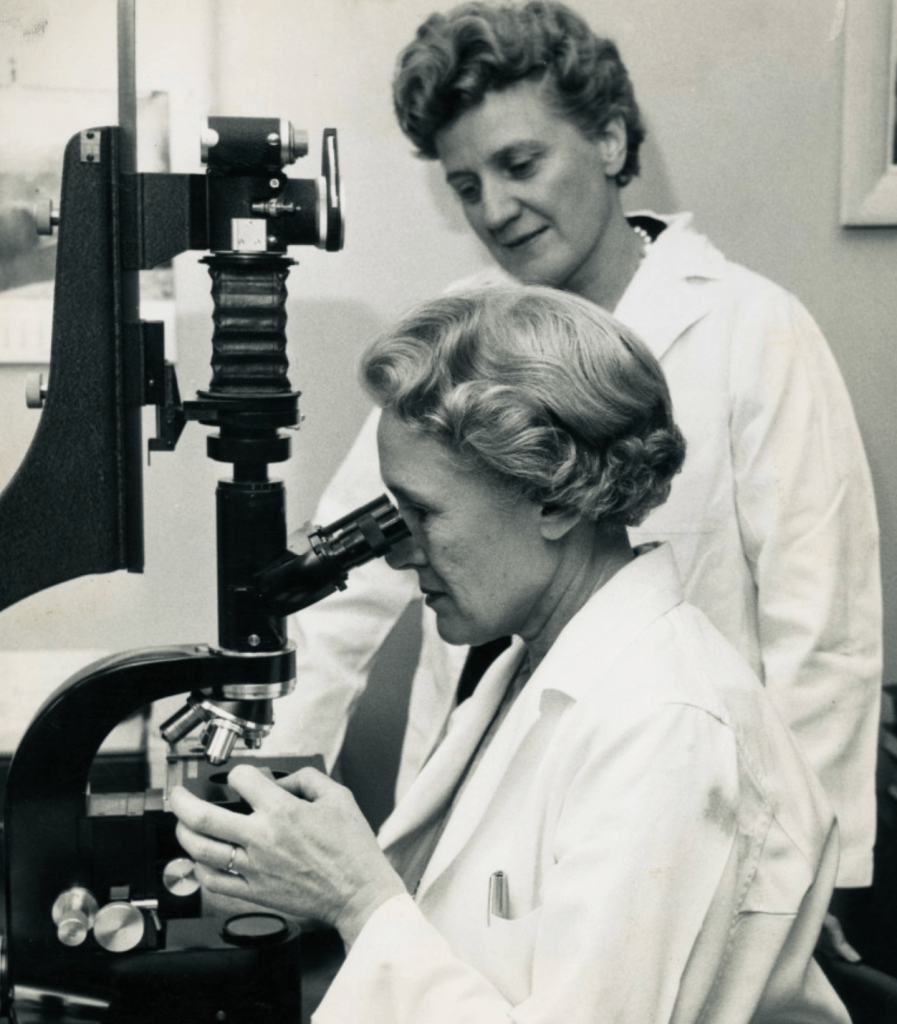
Lady Banting developed an interest in the use of mammography in breast cancer, which at the time, was only used as a treatment tool. It was known that early detection of cancer leads to better outcomes, mammography was used once cancer was already confirmed. Lady Banting had the simple idea that maybe mammography could be used to identify cancers in women who did not yet show any signs of the disease. In 1967, she co-authored a paper which was published in the Journal of the Canadian Association of Radiologists with Elizabeth Forbes, Head of Radiology at the women’s hospital. This was a ground breaking study, which supported Lady Banting’s idea that mammography is successful in detecting early breast cancer, thus improving outcomes for women and saving lives. The Women’s College Hospital became the first to use mammography as a diagnostic screening tool. Just like the discovery made by her husband, this simple idea has saved countless lives and will continue to do so for many generations to come.
Lady Banting undoubtedly used her famous surname to push her career forward. Maybe it had some advantages for her, maybe it hindered her, but she pushed through this to enhance women’s health and their rights. As keen advocate for women’s rights and the introduction of the contraceptive pill, Lady Banting believed women had the right to to chose when and if they want children, stating:
“(there is ) no need that the years spent in rearing a family should exhaust a woman;s physical or spiritual potentialities. A woman in her forties, if her mind has been cultivated in the twenties, should be able to return to community and public life.”
Lady Banting, quoted in Cameron & Dickin, 1997
She also advocated for more women to enter medicine and science, believing that they are better suited for research in the field of women’s health than men:
“their perseverance, their patience, their deep concern for the welfare of others make medicine a natural career for them. Besides which, the long, arduous and tedious job is better tackled by women than men.”
Lady Banting
Dr Henrietta Elizabeth Banting Ball died in her own hospital, from brain cancer in 1976. Very little is known of her personal life, she appeared to devote her life to medical research. It is known that she never re-married, perhaps this was because she felt loyal towards her husband. Maybe it was because her marriage was cut short by Sir Bantings untimely death, yet she remained impacted by it as a high profile widow. It could simply have been that she never re-married because she devoted in time to her career. Back in her time, women tended to have a career or a marriage, rarely both, although we have seen that this is not what Lady banting herself believed. Always living in her husbands shadow, Lady Banting never received any recognition for her own work. She was never famous in life and is not remembered for her achievement in death, unlike her husband. Yet this incredible women had her own worthy achievements, she made her own discoveries independently of him that are equally deserving of credit. Her story goes untold.
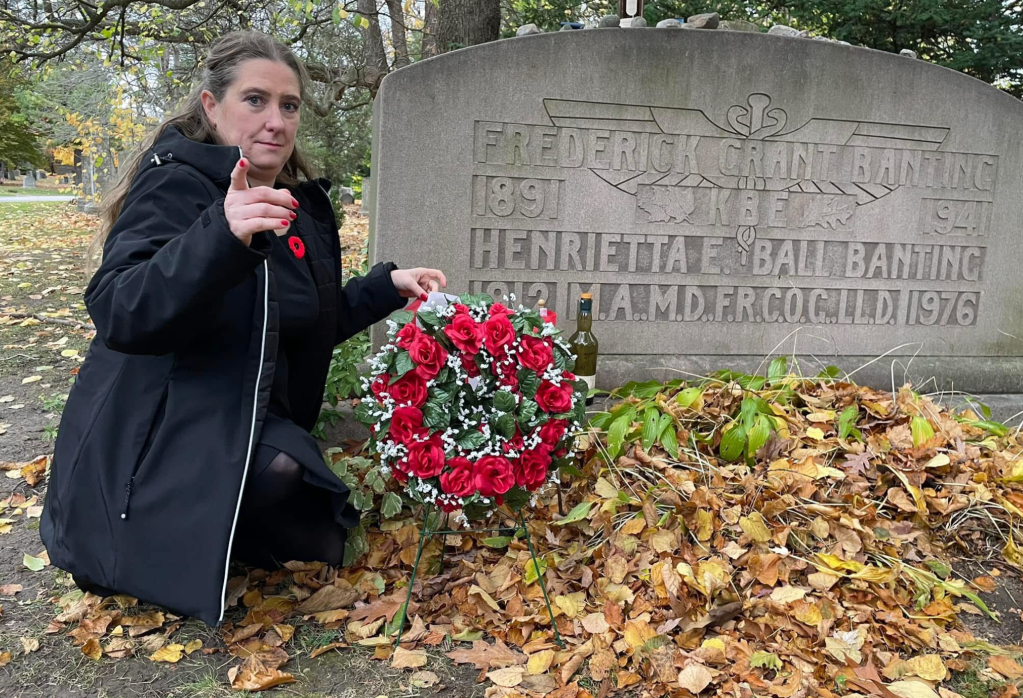
Lady Banting is laid to rest at Mount Pleasant Cemetery, Toronto, now resting with her husband. He made a discovery to treat a deadly illness, she made a discovery to detect one. Both deserve awards and credit.
Cameron, E and Dickin, J, “’By Title and by Virtue’: Lady Frederick and Dr Henrietta Ball Banting,” in Great Dames(Toronto: University of Toronto Press, 1997), pp. 259.
“Lady Henrietta Banting: a Life of Service,” Canadian Medical Association journal (U.S. National Library of Medicine, January 8, 1977), https://www.ncbi.nlm.nih.gov/pmc/articles/PMC1879130/, 85.

 The Stories Behind the Stones
Leave a comment