Category: Uncategorized

  • Arthur Surr

    Arthur Surr

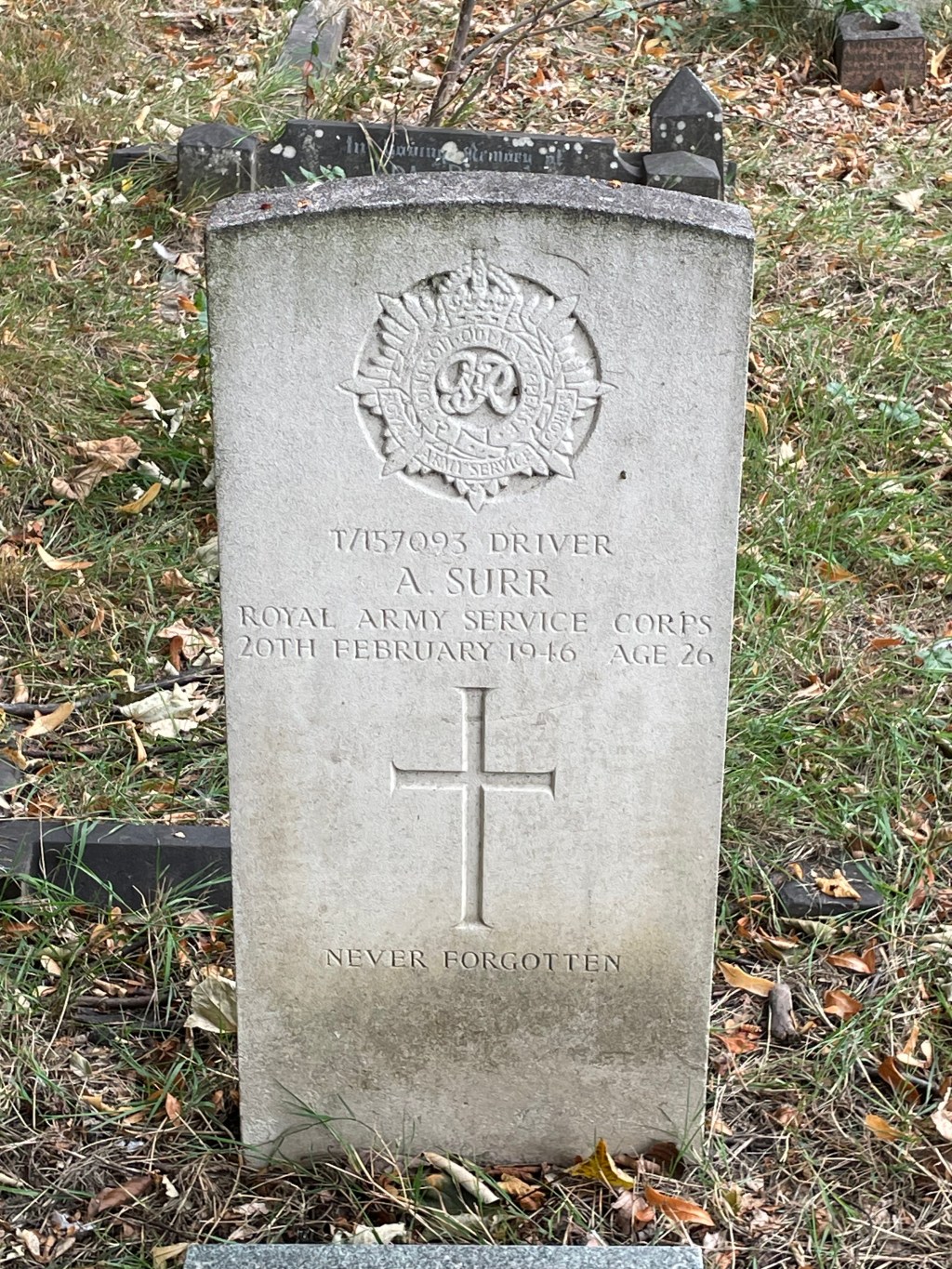
    Arthur Surr T/157093

    278, General Transport Coy R. A. S. C

    Arthur Surr was born to George Edward and Laura Surr (nee Attack) on 7 November, 1919 in Holbeck, Leeds. George worked as a clothiers stock cutter and during world war one, he attested to the Royal Garrison Artillery where he served as a signaller and telephonist. George sailed from Southampton to Havre in October 1916 and served on the western front until he was injured in May of 1918, a shrapnel wound to the head that would ultimately send him home.

    Arthur was the only child and was born at a nursing home in Holbeck, his fathers occupation is listed as clothiers cutter. On the 1921 census, the family are living with maternal grandparents in Hunslet, George is noted as an out of work clothier’s cutter. It is therefore possible that the family were struggling financially and moved in with parents, or that George was unable to work due to the head injury he obtained in the war.

    In 1939, a 20 year old Arthur was living at home with his mum, his father having passed away in January, 1925. Mum Laura was working as a bespoke sewing machinist, whilst young Arthur worked as a railway messenger. World War Two broke out and on 1st February, 1940, Arthur signed up to the 278th Transport Coy, Royal Army Service Corps, stating his civilian occupation as a railway porter.

    Arthur served as a driver until  21 June, 1942, when he was captured in Tobruk, Libya, he would remain a Prisoner of War until its end three years later. In Surr’s post war POW questionnaire, he stated that he was not injured when captured. He was captured and detained in several camps; Altamura from July to September 1942, Capri from September 1942 to September 1943 and finally Schornewitz in Germany from October 1943 until liberation in April 1945. Schornewitz camp provided forced labour for Germany and Surr took part in factory work there. Schornewitz, in the Saxony region, was home to a large industrial power plant which was commissioned during world war one.

    After liberation of the camp and the end of the war, Surr returned home and married his sweetheart, Inis Walton, a Welsh girl originally from Pontypridd, although they married in Hereford on  17 July, 1945. The marriage was short lived, however, as sadly Arthur passed away seven months later on 20 February, 1920, in Seacroft Hospital, Leeds, his cause of death is “sub acute endocarditis, resulting from war services.”

    Inis re-married just 11 months after her husbands death, she moved to Hampshire and had two children.

    Arthur Surr is laid to rest at Hunslet Old cemetery, Leeds.

  • Alfred Place

    Alfred Place

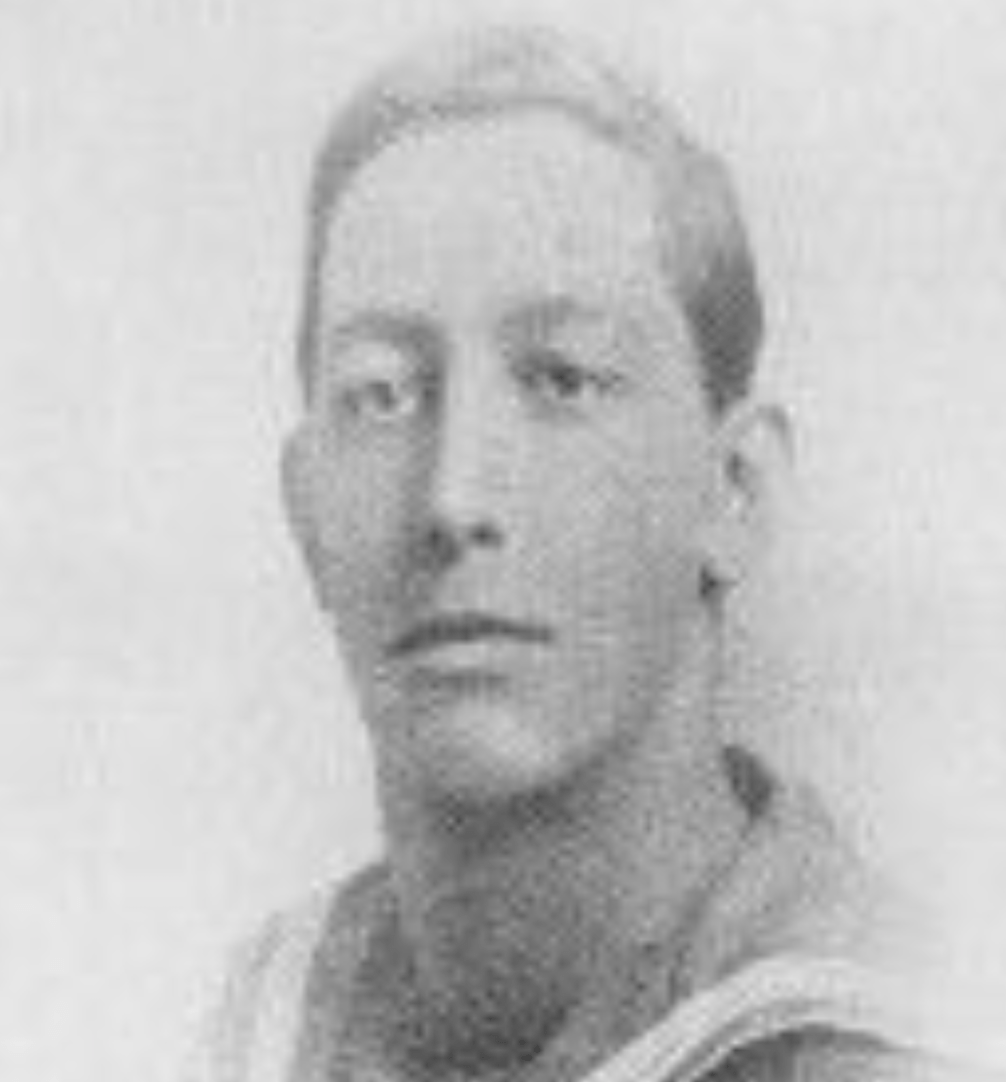
    Petty Officer Alfred Place J/3080

    FAMILY BACKGROUND

    Alfred Place was born on 8 October, 1891, to William Place and Jane Potts Place (nee Finch), in Hunslet, Leeds. 

    On the 1891 census, the family were living at 6 Brunch Church Street, Hunslet and William was working at a Swimming Baths, although on later census data he is working as a labourer at the gas works. Alfred had two older brothers, John William, and Thomas, who were 6 and 4 years his senior respectively and two years later, his sister Ada would come along to complete the family.

    Alfred joined the Royal Navy four days after his 17th birthday on 12th October, 1908, his civil occupation upon joining is noted as “Errand Boy”. Initially assigned to the shore-based ship HMS Ganges II, it is known from his records Alfred served at/visited many such establishments including Berwick and Donegal. It is possible this was due to his prowess as a boxer taking part in local RN tournaments.

    The Census of 1911 shows young Alfred at Exeter Hotel, Torquay, as an Able Seaman. It is possible that Alfred was inspired to join the military by his older brothers, both of whom had served prior to the war.

    [Eldest brother John William had served throughout the Boer War and was discharged in February 1904 with his “time expired,” the 1911 census states he is now working as a coal miner.]

    [Older brother Thomas had also served two years in the West Yorkshire Regiment around the year 1908, by 1911 he was working as a “motor-man.”]

    WAR SERVICES

    Alfred was therefore the only brother already serving in August 1914 when war was declared in Europe, but all three brothers served in World War One.

    [John William attested to the Royal Regiment of Artillery as a gunner (later Bombardier) on 5th September, 1914, so within weeks of the declaration of War and just two weeks after his youngest child Albert William was born.]

    [With his two brothers not “home by Christmas” Thomas Place, now working as an electrician, joined in with the war effort and attested to the West Yorkshire Regiment on 28th December, 1914, leaving behind his wife Fanny and their baby son, Thomas.]

    The three brothers were now at war, Alfred was to spend time in Gallipoli, Thomas in France and John William at Mesopotamia (Iraq), with some time in India.

    During wartime, Petty Officer Albert Place served with the Royal Naval Division (RND) Nelson Battalion (though his CWGC entry gives Drake Battalion). The Nelson battalion started in Antwerp in October 1914, were heavily involved in the Gallipoli campaign in 1915 and by 1916 spent their time on the Western Front.

    By June 1916, Petty Officer Place was at Blandford, Dorset, alongside Lieutenant H.J. Luckman, instructing recruits in the use of bombs during trench warfare. On June 16th, Place was instructing five men in a trench on grenade use, one of the men, O’Neill, was “in the act of throwing the grenade” when due to nervousness, he was shaking and dropped it, causing it to fall short. Place had “considerable experience” of this kind of work, both in Gallipoli and at Blandford, he could foresee the danger his men were in. Place caught O’Neill and moved him to safety, then comrade Dixon, who had been injured by the missile striking him. Place then attempted to go into the trench to remove the grenade before it exploded, Lieutenant Luckman tried to move him to safety, but could not do so before the grenade finally exploded, killing Place ‘instantaneously‘.

    At the inquest some weeks later, the Lieutenant stated that every precaution was taken and Place’s heroic actions prevented the deaths of at least three other people. A verdict of accidental death was recorded, with a note that Place self sacrificed, which the Navy said was the spirit and tradition of all it’s men.

    Petty Officer Place was well liked and well loved around Blandford, he was a very agreeable young man. A champion boxer who extensively travelled, prior to going to the front, he would take part in and arrange boxing tournaments for naval men, he had “splendid form: and a clean boxing style, which made him a firm favourite with his comrades”.

    The whole town of Blandford sent their condolences to Place’s family. Evidence exists which indicates Place indeed took part in boxing tournaments all over the world throughout his entire boxing career and he would send gifts home from across the world, including an ornate photo frame from China.

    AWARD OF THE ALBERT MEDAL

    Posthumously, Place was awarded the Albert Medal, this high merit was awarded for his bravery and self sacrifice which saved several lives.

    An extract from the London Gazette dated the 1st January 1918, records the following :

    “The King has been graciously pleased to award the Decoration of the Albert Medal in recognition of the gallantry of Petty Officer Alfred Place, late of the Royal Navy.” The circumstances are as follows : “At Blandford, on the 16th June, 1916, during grenade practice, a live bomb thrown by one of the men under instruction fell back into the trench. Petty Officer Place rushed forward, pulled back two men who were in front of him and attempted to reach the grenade with the intention of throwing it over the parapet. Unfortunately, the bomb exploded before he could reach it and inflicted fatal injuries. By his coolness and self-sacrifice Petty Officer Place probably saved the lives of three other men.”

    HIS BROTHERS’ WAR SERVICE

    Thomas Place left the West Yorkshire Regiment after the war, he was awarded a Meritorious Service Medal for working under heavy enemy fire during the Battle of the Somme. During the Somme, Thomas worked as a stretcher bearer, so it was his job to go over the top into no mans land, where he had to carry injured soldiers to be treated somewhere safer. Thomas was proud to have never missed a day, stating many decades later that he ‘never missed a day in the trenches with the stretcher bearer.’

    John William also survived the war, he served in Mesopotamia and India, he sailed home in late March 1919, arriving back on 20 April. He claimed a disability pension, he had five more children and in 1939 was working as a nightwatchman.

    LAST WORDS…

    It must have been bittersweet for only two of the three brothers returning home. Thomas was very close to Alfred, he kept his brothers military medals and other memorabilia and eventually donated them to Leeds City Museum, along with his own.

    Petty Officer Albert Place AM, is laid to rest at Hunslet Old Cemetery in Leeds.

  • Private Harry Foster

    Private Harry Foster

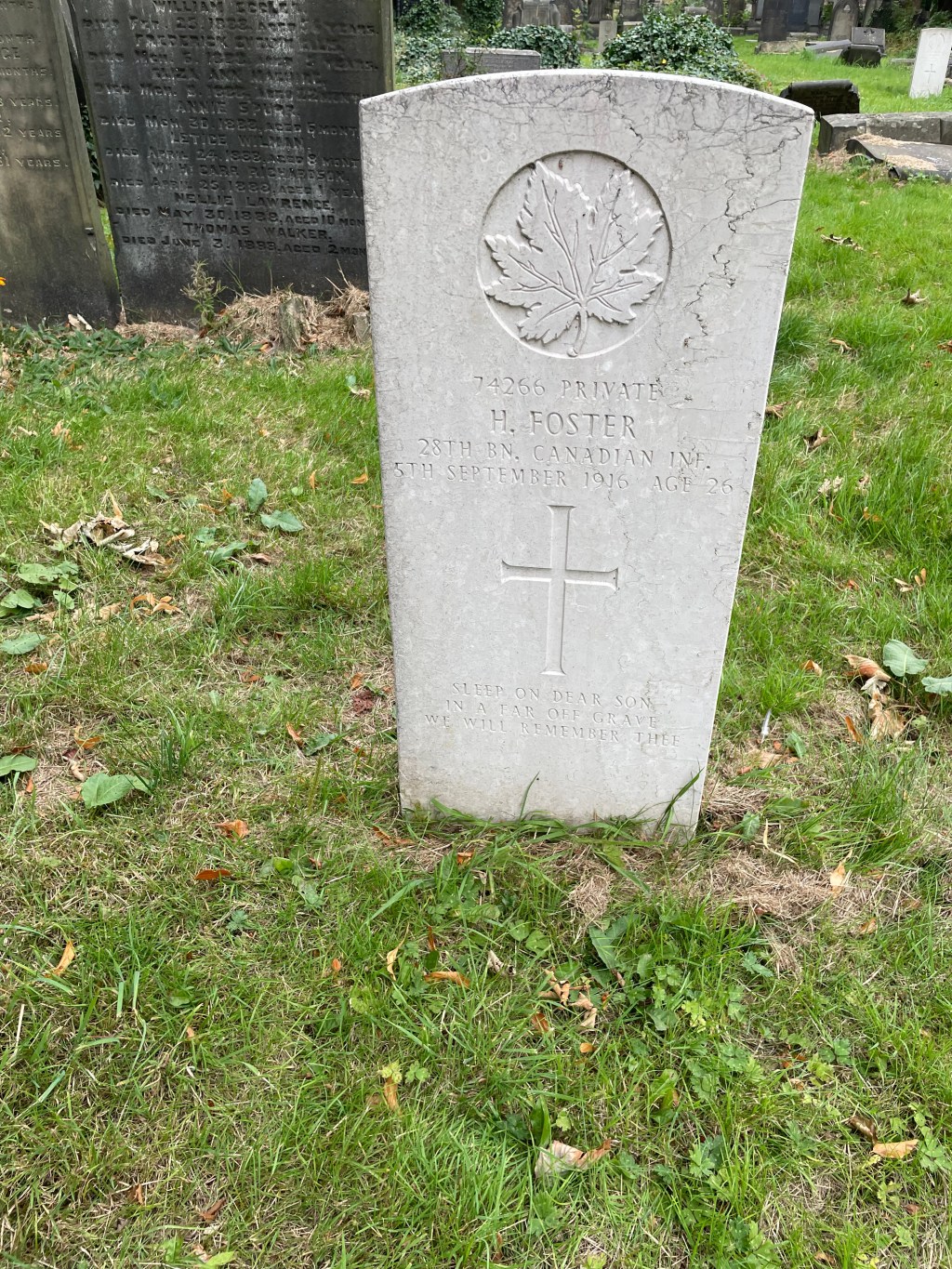
    74266, Canadian Infantry

    Harry was born in Leeds on 29 December, 1889. His father Richard was originally from Broughton, Lincolnshire, he moved to Leeds to marry his wife Margaret Ward, who was from the suburb of Rothwell. Richard was a labourer at the Iron Works, Margaret was a homemaker and the couple parented several children; James, John, Harry, Edwin, Richard, Jane, Eliza and George.

    On the 1901 census, the family were living at an address known as 81 White Cottage, Osmondthorpe, Leeds. The older children had presumably left home with just James, John, Edwin, Harry & George still living at home.

    In 1906, the family emigrated to Winnipeg, Manitoba, Canada. The 1911 Canadian census shows just Margaret, John, Edwin, Harry & George residing at 397 Weatherdon, Winnipeg. It is unkown where Harry’s father Richard was, but there is evidence he stayed in England and died there in 1921. A 21 year old Harry was working as a machinist.

    A further 1916 census was taken in the province of Manitoba, this shows Margaret as head of the household, who usually lived with Harry who was away as a Soldier. Margaret and Harry lived at 411 Brandon Avenue, but the family lived next door to each other on the same street. At number 409 was Harry’s brother George, who was living with his wife Etta, a Nova Scotia native and their two children George and Mary. George Senior worked on the railways. Harrys older brother Edwin also resided at 411, he was also married to an English girl named Georgina whom emigrated in 1909, but they did not yet have any children.

    On 15th March, 1915, a 26 year old Harry attested to the 28th Battalion, Canadian Expeditionary Force, which was an infantry battalion. Again, his occupation is shown as a wood machinist at this time. Service records state that Harry was 5ft 9 and a half, had a fair complexion, blue eyes and light brown hair.

    Harry sailed with the 28th Battalion, C.E.F from Montreal on 29th May 1915 on the SS Northland (this ship was later called the Zeeland).

    On 25th July 1915, perhaps inspired by his younger brother now being in France, Edwin also attested to the 90th Regiment, known as the “Winnipeg Rifles.” Edwin’s occupation at attestation was Locomotive Engineer.

    Harry had spent 14 months in France when he became injured in August, 1916. He was most likely injured at the Somme, as the 28th battalion had fought there. On 5th August 1916, Harry received a gun shot wound to the right shoulder, this had settled in the axilla (armpit). On the 9th August, the shoulder was X-Rayed, it was found that Harry had multiple fractures, his wound was incised but part of the bullet was missing and never found. Harry was struggling with chest pains, his medical notes state that he had a history of pneumonia. On 23rd August, a further exploratory incision was made, but the fragment was still not found. By 26th August, Harry complained that his chest symptoms were getting much worse, a feeble pulse was recorded in his file. The 28th August noted a slight improvement in symptoms, but these were not maintained and Harry was put onto half hourly oxygen therapy.

    At some point in August, the decision was made to transfer Harry to a war hospital in England for treatment, although it may have been clear at this point that he would not recover from his injuries. Heart failure is noted on 4th Septmeber, Harry was at Brook War Hospital, Woolwich, where he died of heart failure on 5th September, 1916 at 02:40.

    Private Harry Foster is laid to rest in Hunslet (Old) Cemetery in Leeds.

    As we know, Harry was born in Leeds, lived in Canada, died in London, but a “next of kin” is listed on his army documents as a Mrs Priestman, who lived at 2 Far Royds Terrace, Wortley, Leeds. It is assumed that Mrs Priestman liased with the organising of Harry being laid to rest in his home city.

    Harry’s brother Edwin survived the war, he was promoted to Corporal just three weeks after his brother’s death and then to Searjent less than 3 months after that. He must have wondered the futility of it all. Edwin sailed back to Canada in May 1919. On the 1921 Canadian census, Edwin had returned to his work as a railway engineer, he and Georgina had a 6 year old daughter, Annie, this would indicate that Edwin had a young child when he went away to war. On the 1926 Prairie census, they had welcomed another daughter, Evaline, now aged 2.

    “SLEEP ON DEAR SON IN A FAR OFF GRAVE WE WILL REMEMBER THEE”

    Remember Him.