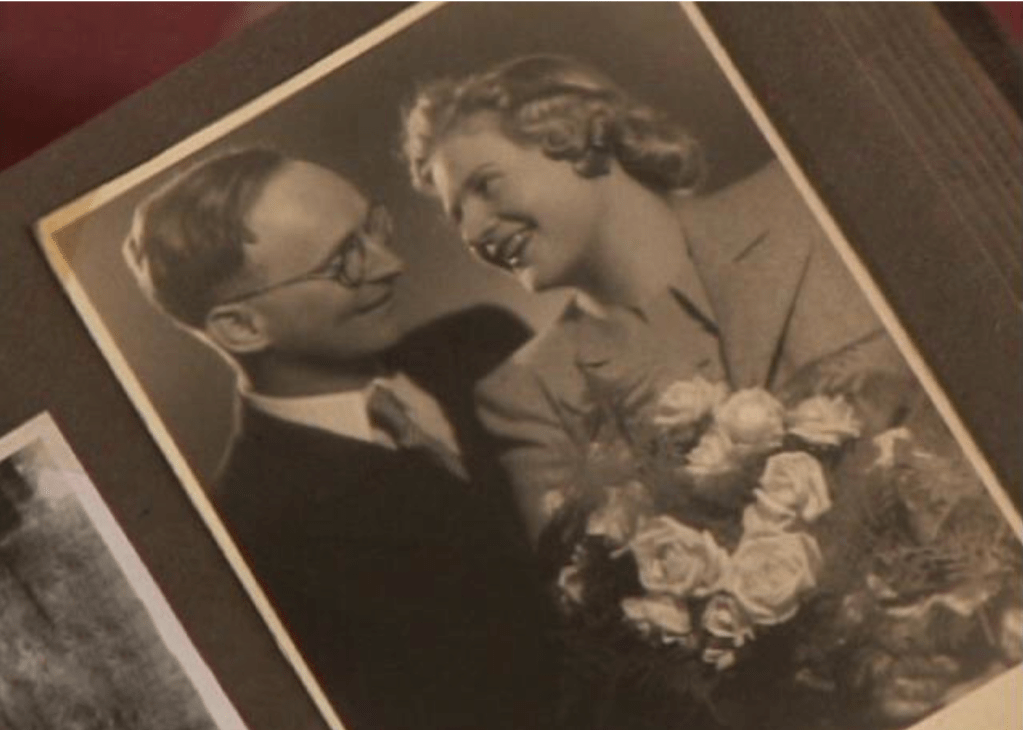
Eva Ruth Arend was born in Prague to Oskar and Irma Arend on 1 April 1920, her brother came along the year after. The Arends were a wealthy family and prioritised the education of their children, private tutors ensured Eva could fluently speak 3 languages in childhood and she learnt 5 more in adulthood. Victor Saxl was a textile engineer, 11 years older than Eva, in 1940 they married in Prague. Due to Nazi occupation of Czechoslovakia, the newlyweds fled their homeland to escape persecution.
The Saxl’s left Europe on the “Conte Verde”, an Italian ship that went through the Suez canal to Asia. Most passengers were Italian troops heading for Libya or Eritrea. After they disembarked, Eva became aware of around 300 other Jews fleeing the Holocaust: the ship stopped at Aden, Bombay, Colombo, Singapore, Saigon, Manila, Hong Kong and Shanghai. The ship was inspected several times by British authorities in the colonies who gave the jews enough water to reach the next destination. 20 Czech Jewish men disembarked and decided to fight for the British, Eva knew they were willing and not forced to do this because she interpreted for them. Finally, the Saxl’s eventually reached Shanghai where they joined around 18,000 refugees in the Jewish ghetto.
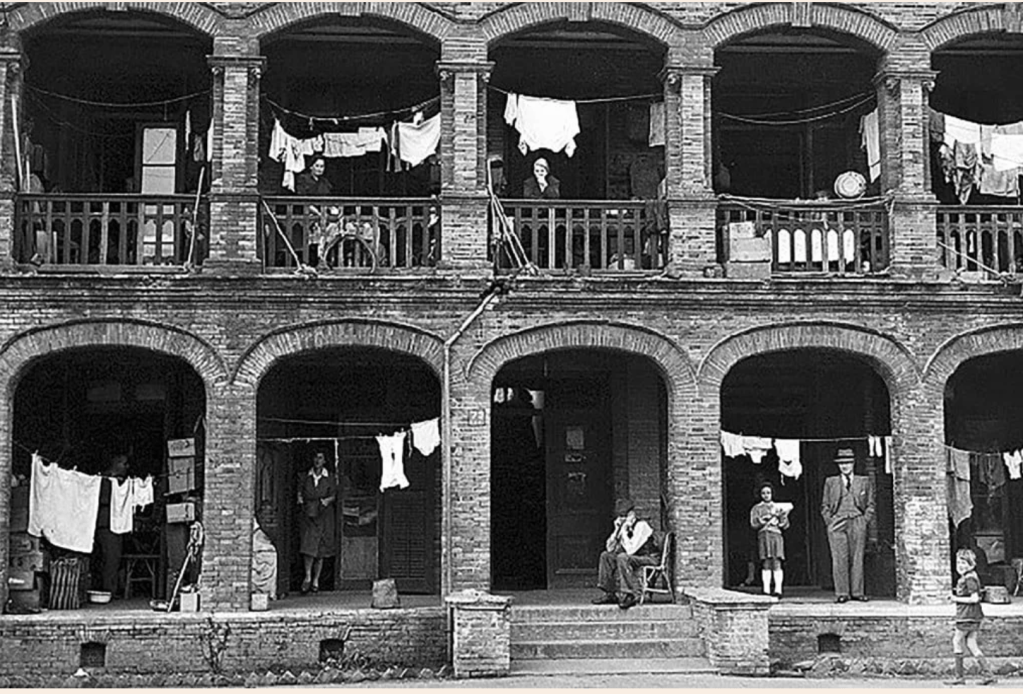
Victor Saxl found work doing general engineering work at the British Woollen Industries mill, at the time it was the largest woollen mill in China. Within weeks, he was promoted to manager. Eva became a language tutor, teaching English to Chinese children, she earned a good income and had as many as 80 students. The Saxl’s were living well, their lives were now safe and they had good salaries, sadly, this was not to last.
Around a year after arriving in Shanghai, Eva became ill, in her own words:
“I suffered unquenchable thirst, rapid loss of weight unaccustomed sleepiness.” Eva consulted the Doctor who worked in one of the schools she taught in, in Chinese he told a colleague that Eva has “sugar water disease.” Eva understood enough Chinese, and was intelligent enough, to know what this meant. Eva was Type One Diabetic and had to start injecting insulin straight away. Diabetes was not initially a problem to the Saxl’s because they could afford to buy insulin and Eva stated:
“my husbands love and understanding enabled me to avoid the panic and psychological problems which so often arise.” Again, sadly this situation was also not to last.
On 7th December, 1941, Pearl Harbour was attacked. The Japanese concentrated on their colonies and occupied Shanghai in just one day. As part of this raid, pharmacies were closed and insulin was confiscated. The Saxl’s had the foresight and money that day to run around pharmacies buying any available insulin. Victor pleaded with the Japanese military occupying the city to make lifesaving insulin available, but he was told that death happens during war. Without insulin, Eva’s death was inevitable. The Saxl’s looked into black market supplies. Victor later reflected:
“brokers would sometimes hunt us up and offer insulin at fantastic prices. I once traded a gold bar worth $80 for 18 bottles of insulin ($1,900 in todays money, with inflation). It was worthless and it was so painful that Eva screamed when I injected it into her.”
This black market insulin was not only painful, but it killed. Eva recalled:
“Our Chinese friend secured 18 bottles and generously offered to share them with me, but he died after the first injection. It was poisonous liquid.”
After the death of their friend, the Saxl’s could not risk using black market insulin. Victor said “My Eva is not to die, and neither are those several hundreds of diabetics stranded in Shanghai.” With this, Victor came up with a radical idea; he would use his engineering skills to produce his own insulin. Neither Victor or Eva had received any medical training, they were not physicists, scientists or chemists. Victor was a textile engineer, not a pharmaceutical one. Upon asking several medical friends in the ghetto for help, they simply declined to be involved because it was so risky and the potential for creating a lethal substance was very real. Victor therefore took it upon himself to learn how to make insulin, with Eva helping when she was well enough. By this time, Eva was rationing her pharmacy bought insulin and coupled this with a very strict “starvation” diet, which causes death by malnutrition. The plan was that this would keep Eva alive (although she would be very ill) for long enough until they could produce their own insulin. Eva later recalled:
“In order to protect me from panic, Viktor secretly refilled the empty bottles with water to make me believe I had more life left.”
These conditions seemed hopeless, but would Eva be kept alive?
Although Doctors refused to help, they did lend Victor some medical textbooks that explained about the chemistry of insulin. Written in six different languages, the Saxl’s were fine with this as they both had exceptional linguistic skills. Mr Saxl learnt all about the work of Banting & Best, discoverers of insulin, he aimed to identify and copy Banting’s work.
First, the Saxl’s needed money to buy pancreases, they arranged socks to be knitted at the wool factory and these were sold to raise funds. Eva went to Seymour Road Slaughterhouse with her friend at 5am in the morning, she chose to buy the pancreases (or pancreata in Latin) of water buffalo’s because they had large organs. Victor had a friend Mr Wong, a scientist who loaned them a small lab and basic medical supplies. The Saxl’s put the pancreata into wide topped thermos flasks and refined them into a mixture with ice, alcohol and centifruge.
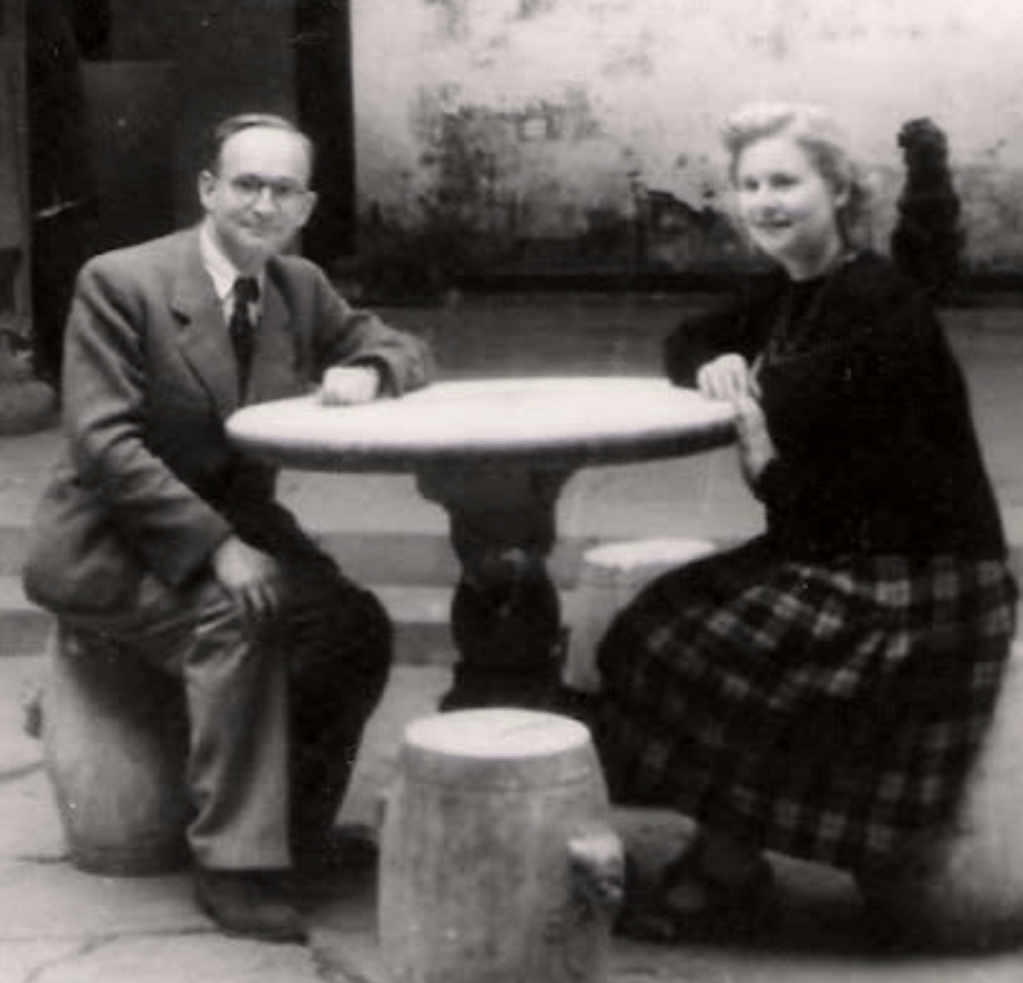
A few months and many experiments later, Eva only had 5 days worth of pharmaceutical insulin left, she was very unwell and without any more she would die within days. Victor had by this time produced a murky substance, but insulin should be clear, like water. It was their only hope. The risks were huge: the pancreata used could be contaminated, the insulin could be too strong, or too weak, it could be infected or could induce a lethal hypo. Mr Wong tested the substance on rabbits, 3 rabbits were given murky insulin and 3 given the same amount of pharmaceutical insulin. The timing of hypoglycaemia occurring in the rabbits was noted to help decide how potent (or weak) the insulin was. There was very little time for scientific testing. As there was no other solution, and death was inevitable anyway, Eva agreed to be the guinea pig and was injected with the murky buffalo insulin. Eva did not scream this time. It did not sting. Eva began feeling better. By way of a miracle, the Saxl’s had produced their own insulin. Immediately after Eva’s first injection, the murky insulin was taken down to the hospital where the Saxl’s knew of two young boys in diabetic comas dying. Just like “medicines modern miracle’ in which, 20 years before, Dr Banting had injected sick children with his experimental substance and the boys woke up and lived normal lives, these two boys also stirred and went on to live normal lives. One of the boys grew up to have his own son, whom he named Victor after Mr Saxl, who saved his life.
The next problem was that 420 diabetics had registered at the lab enquiring about manufacture of insulin. The Saxl’s shared their batch with others in need, but it was rationed at 16 units per person per day and was coupled with a starvation diet. Mass production and a stockpile was needed, but this was hard in Japanese occupied China during a world war. Power was needed, but war meant the electricity supply was often off. An American B-52 came over and bombed the power plant, it took several weeks for the power to be restored. Disease was rampant and inflation incredibly high, supplies such as ice and alcohol were difficult to obtain. Chinese suppliers put themselves at great risk to obtain supplies. Eventually, a good stockpile of insulin was built and there was enough insulin for everyone in the ghetto who needed it.
Other medical supplies were low, such as glass bottles for insulin. The original pharmaceutical bottles were sanitised and re-used, as locally made bottles tended to make the insulin go off. Needles were in short supply, most diabetics in the ghetto only had one needle and this would be boiled to sanitise it and occasionally re-sharpened at the lab with a devise Mr Saxl had engineered. This is a crazy thought in a world where needles are single use and disposable!
Just like Banting 20 years before, the Saxl’s refused to take any payment for their insulin. No one had to worry about paying. Some people insisted on making a voluntary contribution to help cover the costs. Other patients “paid” by donating ice or alcohol to contribute to the manufacturing. Mr Saxl paid Mr Wong for use of the lab with knitted stockings from the wool factory. Some tried paying with food for the Saxl’s, but their real payment was seeing other diabetics in the ghetto healthy and continuing Sir Banting’s work – insulin should be available to all who need it.
Eva stated “I am proud to say that not a single diabetic died then due to lack of insulin” The Saxl’s had no medical training, driven by pure determination and love for life, they created the seemingly impossible.
After the war, the Saxl’s didn’t think Shanghai held many opportunities for them. Unsure what to do or where to re-settle, they decided to take some time out and visit America. Arriving in San Francisco, they planned to travel across the US. By now their story had spread across the world (the 1940’s equivalent of going viral), President Truman invited them to the White House where Eva gave a speech about Type 1 and her experiences in the ghetto. The Saxl’s were invited to apply for neutiralisation. Dr Elliot P Joslin, founder of what is now the Joslin Diabetes Centre in Boston befriended Eva and set up work for her giving lectures and speeches about her experiences with Type 1. Eva would talk to groups of diabetic children and to diabetes organisations across the US and sometimes beyond. Charles H. Best, co-discoverer of insulin, invited the Saxl’s to a diabetes conference in Toronto, the birthplace of insulin. Again, Eva gave a speech and Best enjoyed talking to Victor about how he discovered the chemical compounds of insulin. Many of the Saxl’s speeches were televised and Eva made many appearances on TV across the world. Eva effectively became the first type one diabetes advocate and global spokesperson, effectively, an influencer in the field.
Victor took a job as a textile machinery engineer. In 1968, Victor’s was on a business trip in New York, whilst there, he accepted a job with the United Nations. As part of this trip, he was sent on a 3 week trip around South America. Eva’s brother, also called Victor, was living in Santiago, Chile, where he had fled to during the war. As part of the 3 week trip, the Saxl’s visited Victor Arend and stayed with him. During this time, Victor Saxl suffered from a sudden heart attack at age 58, which proved fatal.
A devasted Eva did not know what to do with her life; she didn’t want to go back to the states without her husband, she had previously visited Prague but didn’t feel any connections there anymore after her parents and the rest of the family perished at Birkenau. Believing her husband had led her to Santiago, she decided to stay and live with her brother.
In Chile, Eva noticed that there was a lack of diabetes education and care in many parts of the country. A long, thin country bordering the pacific ocean, with mountains and many small islands meant that travelling around the country could be difficult. A developing nation, with many communities living in abject poverty and rural life being cut off from cities, meant that knowledge of type 1 and how to treat it could vary wildly across the nation. Eva worked with the Chilean Government, the Diabetes Association of Chile and worked with underprivileged communities to provide insulin. Eva authored books, training materials and academic materials to improve diabetes education at patient, healthcare, medical and government levels. Eva travelled across South America, and the world, improving diabetes education and access to insulin. In 1991, she received the Charles H Best medal for “distinguished service in the cause of diabetes.”
Eva died aged 81 in 2002, having committed her own life to improving and saving the same of type one diabetics all over the world.


 The Stories Behind the Stones
Leave a reply to kathboden666 Cancel reply